Manual Hydraulic Pellet Press About
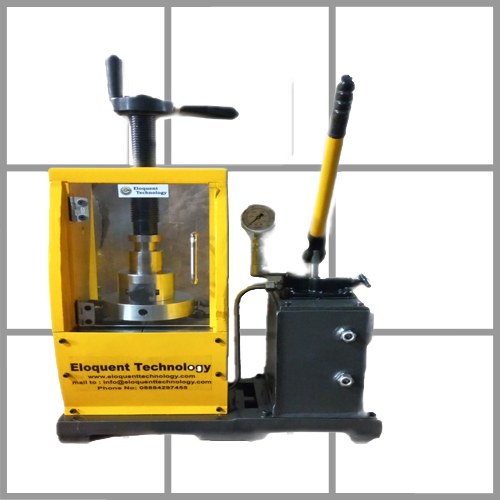
Solid, high-quality pellets are an important precondition for reliable and meaningful XRF analysis. The HPP 30 is a compact benchtop unit with particularly simple and safe operation. With a pressure force of 30 Ton it is ideally suited for the preparation of solid samples for XRF analysis,KBr discs for FTIR analysis. The pellets produced are of high quality and are characterized by their high degree of stability. The piston pressure can be read off from the clearly visible manometer scale. The dies for the Pellet Press PP 30 are available in several diameters and can be evacuated completely.
Consistent and Adjustable Pressure ApplicationThis manual hydraulic press offers consistently accurate pressure application with 2% variability, fully adjustable up to 20 tons to suit a range of sample requirements. Its advanced hydraulic manual technology ensures uniform pellet pressing across varying thicknesses and die sizes, enhancing the integrity of lab analyses.
User-Friendly Safety and StabilitySafety is prioritized with integrated pressure release valves and a mechanical locking system, which protects users from accidental pressure surges. The heavy-duty welded steel frame and stable base ensure reliable, low-noise operation while minimizing vibration during the pressing process.
Flexible Die Set Compatibility and Durable DesignAccommodating a broad range of die set diameters (5-40 mm), this press adapts to multiple lab procedures. Its high-grade alloy steel base and epoxy powder-coated finish deliver durability and corrosion resistance, making it a long-lasting asset for any analytical laboratory.
FAQ's of Manual Hydraulic Pellet Press:
Q: How do I operate the Manual Hydraulic Pellet Press safely?
A: Begin by selecting the appropriate die set (5-40 mm) and ensure it is securely installed. Place your sample, set the desired pressure using the hydraulic lever, and engage the mechanical lock for added safety. Always use the pressure release valve to gradually release pressure after pressing to prevent accidents.
Q: What types of samples can be pressed with this machine?
A: The press is ideal for preparing pellets from powders or similar materials for laboratory analysis, such as FTIR or XRF sample preparation. The adjustable pressure (0-20 tons) and various die set sizes make it suitable for a wide range of laboratory applications.
Q: When should I perform maintenance on the pellet press?
A: Routine maintenance involves periodic manual greasing of the indicated points and checking the oil reservoir (capacity: 1.2 liters) for refills. Inspect the hydraulic system, die sets, and mechanical lock regularly to ensure smooth operation and optimal safety.
Q: Where can the pellet press be installed for optimal operation?
A: Position the press on a stable workbench within a laboratory environment, ensuring ambient temperatures between 5C and 40C. Its compact dimensions (approx. 520 x 350 x 720 mm) enable installation even in space-constrained work areas.
Q: What is the process for producing pellets using this press?
A: Insert the chosen die set and sample into the press. Slowly operate the manual hydraulic lever to apply the required pressure. After holding for the required duration, release the pressure via the valve and remove your pellet. The whole process is manual, allowing the user to control working speed and pressure.
Q: What are the benefits of a manual hydraulic press over electric models?
A: Manual operation offers reliability in areas with unstable power supply and delivers precise pressure control without the risk of electronic malfunction. The absence of external power also results in low maintenance costs and improved portability.







 Send Inquiry

