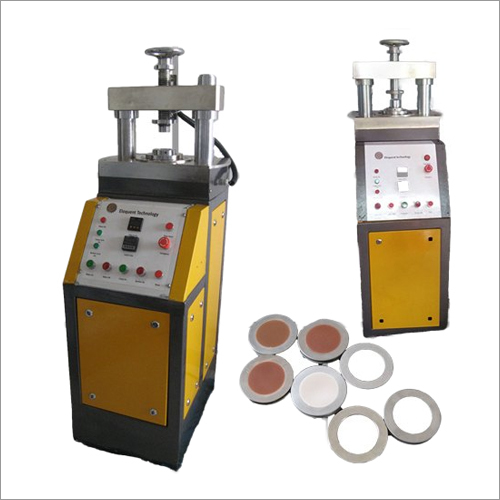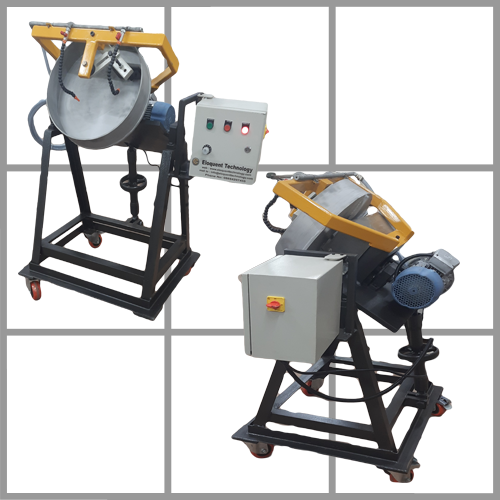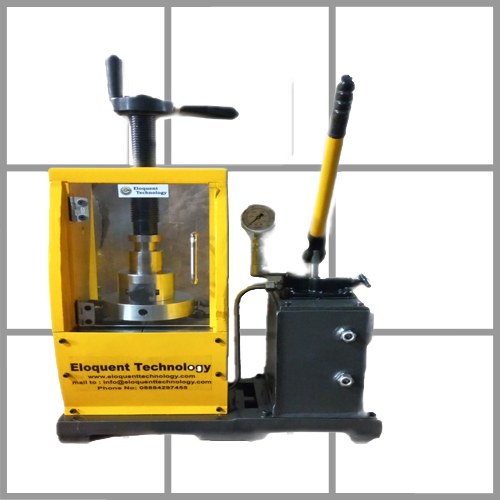
About Laboratory Hydraulic Pellet Press Machine
Solid, high-quality pellets are an important precondition for reliable and meaningful XRF analysis. The PP 25 is a compact benchtop unit with particularly simple and safe operation. With a pressure force of 25 t it is ideally suited for the preparation of solid samples for XRF analysis. The pellets produced are of high quality and are characterized by their high degree of stability. The piston pressure can be read off from the clearly visible manometer scale. The dies for the Pellet Press PP 25 are available in several diameters and can be evacuated completely.
Product details
|
Automation Grade
|
Automatic
|
|
Material
|
Mild Steel
|
|
Voltage
|
415 V
|
|
Safe Operating Pressure
|
200 bar. (with Digital display of set and actual load)
|
|
Ram Stroke
|
50 mm
|
|
Power Source
|
Hydraulic
|
|
Power
|
2.2kw
|
|
Phase
|
Three Phase
|
|
Number of Pole
|
4 pole
|
|
Motor Speed
|
1440 rpm
|
|
Motor Power
|
3 HP
|
|
Model
|
HPP-40
|
|
Max Force on Ram
|
400KN (40 Ton))
|
|
Load Control
|
Real time digital display of set,actual compact load and set time
|
|
Hydraulic Pump Capacity
|
5 LPM at 250 bars.
|
|
Hydraulic Cylinder Speed
|
Upward stroke-0.19 m/min,Return Stroke-0.3 m/min
|
|
Frequency
|
50 Hz
|
|
Current
|
16Amps
|
|
Brand
|
Eloquent Technology
|
Advanced Hydraulic Technology for Reliable Pellet PreparationEngineered with a heavy-duty hydraulic system, this pellet press enables precise pressure control for a wide range of sample types. The use of high-grade stainless steel dies ensures corrosion resistance and longevity, while the analog control system allows effortless operation, covering a pellet diameter range from 5 mm to 32 mm. The pressing cycle is swift, typically ranging from 15 to 30 seconds, depending on the sample material.
Enhanced Safety & Ergonomics for Laboratory EnvironmentsOperator safety is prioritized with features like an emergency stop button, overload protection, and a sturdy safety lock. The press is lightweight for its class and includes sturdy handles, ensuring easy transport between laboratory workstations. Its compact dimensions mean it's ideal for bench top installation without compromising on performance or safety.
Low Maintenance and High EfficiencyWith an air-cooled system and manual lubrication, the Laboratory Pellet Press Machine requires minimal maintenance, only periodic oil changes. Accessories such as a pressure gauge, pressing dies, and a user manual are included, and optional upgrades include heated die sets and digital pressure indicators, further enhancing flexibility and productivity.
FAQ's of Laboratory Hydraulic Pellet Press Machine:
Q: How do I operate the Laboratory Hydraulic Pellet Press Machine safely?
A: To ensure safe operation, familiarize yourself with the user manual before use. Always check the emergency stop button and safety lock before pressing. Start with loading the sample into the die, set the desired pressure using the analog gauge, and initiate the pressing cycle. Avoid exceeding recommended pressure, and ensure the area remains dust-free and at low humidity for optimal performance.
Q: What sample types and pellet sizes can this press handle?
A: This machine is versatile and suitable for compressing powders, tablets, and pellet-form materials. The die set supports pellet diameters ranging from 5 mm up to 32 mm, making it applicable for various analytical requirements, such as those found in XRF and IR analysis.
Q: When should maintenance be performed on the press?
A: Regular maintenance is minimal and generally limited to periodic oil changes as specified in the user manual. It is recommended to inspect the hydraulic oil every few months, depending on usage frequency, and perform manual lubrication as necessary to ensure smooth operation and optimal lifespan.
Q: Where is the ideal location to install and use this machine?
A: For best results, install the press on a sturdy laboratory bench in a low humidity, dust-free environment. The machine's compact footprint (400 x 250 x 500 mm) makes it suitable for most standard laboratory workspaces. Ensure electrical supply matches the required 220V AC, 50 Hz, single-phase rating.
Q: What is the process for changing dies and adjusting to different sample types?
A: Changing dies is designed to be straightforward, thanks to the easy die change feature. Simply follow the user manual instructions to remove and replace the die set as needed. Ensure each die and the material chamber are clean before loading new samples to maintain accuracy and prevent contamination.
Q: What are the key benefits of using the LHP-15 Laboratory Pellet Press?
A: Key benefits include precise pressure control (up to 15 tons), consistent pellet quality, ISO certification, minimal maintenance, and robust safety features. Its portability, compact design, and corrosion-resistant construction make it ideal for dynamic lab settings and facilitate high throughput-up to 50 pellets per hour.