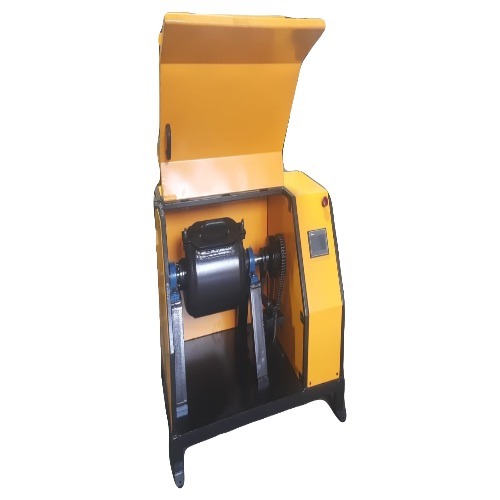
Work Index Ball Mill About
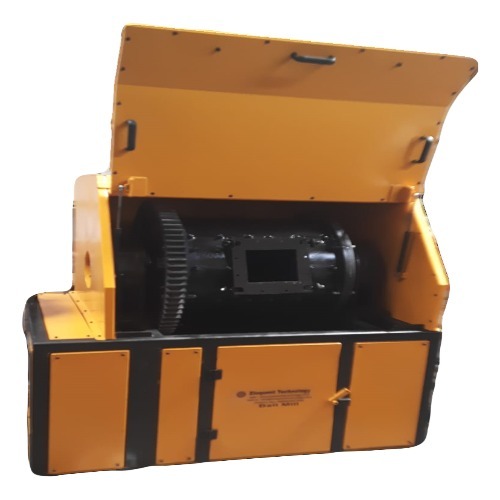
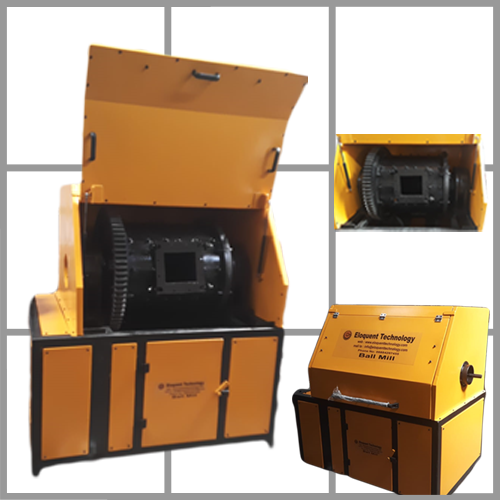
Body made with welded mild steel with suitable flange
Suitable for hard and brittle material
Mill is driven by motor through speed reduction gear box
Perforated steel screen pan and collecting bin is provided for easy operation
Precision Testing for Mineral LaboratoriesThis ball mill is primarily used for calculating the Bond Work Index-a critical measure of ore hardness and grindability-helping laboratories optimize mineral processing workflows. Its sturdy construction and adjustable grind parameters ensure repeatable, accurate results.
Flexible Operation & Durable BuildDesigned for easy manual operation, the mill accommodates a variety of ball materials and sizes. Its heavy-duty frame and choice of mild or stainless steel enhance durability, while compact dimensions make it suitable for confined spaces in laboratories.
FAQ's of Work Index Ball Mill:
Q: How is the Work Index Ball Mill used in laboratory settings?
A: The Work Index Ball Mill is primarily used to determine the Bond Work Index of various mineral samples. In laboratories, it helps assess ore hardness and grindability by subjecting samples up to 25 mm in size to controlled grinding, producing discharge material as fine as 1 mm.
Q: What is the process for conducting a Bond Work Index test with this ball mill?
A: To conduct a Bond Work Index test, a measured sample is fed into the mill with steel balls, then ground under pre-set conditions. After a specified grinding length, the material is discharged and analyzed for particle size distribution, enabling calculation of the Work Index.
Q: When should I choose this ball mill for mineral processing applications?
A: This ball mill is ideal for laboratory-scale mineral testing, especially when precise determination of the Bond Work Index is required. It is recommended for routine testing in research, quality control, and pilot plant operations.
Q: Where can the Work Index Ball Mill be installed, given its dimensions and weight?
A: Designed with compact dimensions (approximately 1100 mm 900 mm 1300 mm) and a heavy-duty frame, the mill fits efficiently in laboratory environments with limited floor space. Its weight varies between 150 kg and 300 kg based on the model.
Q: What are the benefits of using a manually controlled Work Index Ball Mill?
A: Manual control allows precise adjustment of grinding parameters, ensuring repeatable and reliable test results. The user-friendly design simplifies operation and maintenance, making it suitable for routine laboratory use.
Q: How do you select the appropriate ball size for different testing requirements?
A: For optimal grinding and accurate results, select steel balls within 20 mm to 50 mm based on feed size and the sample's hardness. The appropriate size ensures efficient grinding and accurate Bond Work Index determination.




 Send Inquiry

