Wet sieve Shaker About
Usage/Application
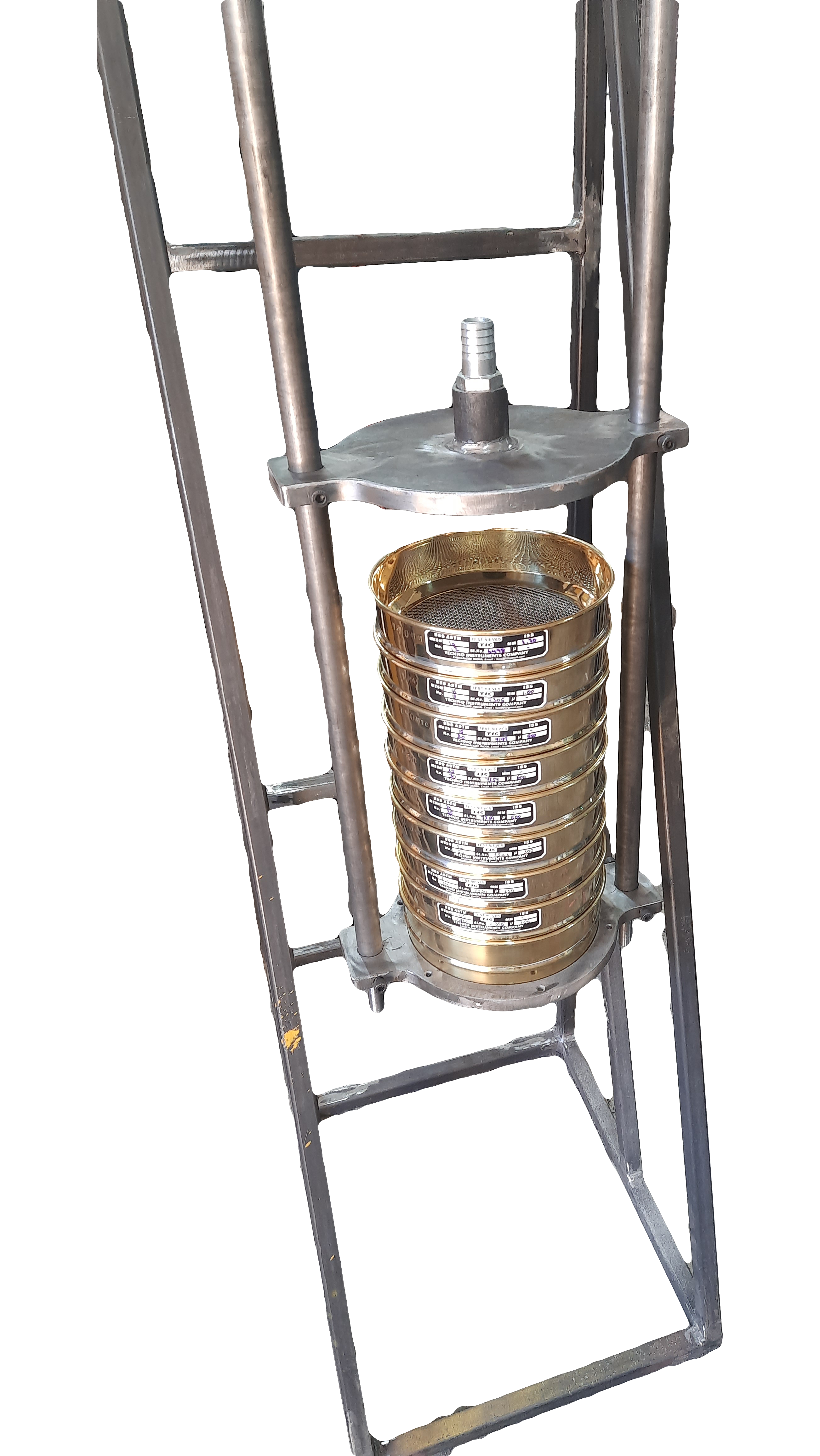
Separation of ore particle sizes
Power
0.37 KW (0.5 HP)
Feed Quantity
100 grams
Screen sieve Size
8mm Dia x 2mm Height
No of Screens
8 nos
Material of Construction
MS
Sieve Sizes
10 mesh,16 mesh ,18 mesh.25 mesh,30 mesh ,52 mesh ,100 mesh and 150 mesh
(can be customized depending upon customer requirement
Efficient Wet Sieving for Diverse ApplicationsDesigned for reliability and versatility, the Lab Wet Sieve Shaker is suitable for laboratories conducting wet sieving analysis on soils, minerals, chemicals, and pharmaceutical powders. Its wet sieving capability ensures accurate separation of fine particles, adhering to IS and ASTM standards for confident results. A combination of vertical and rotary vibration with a programmable timer provides excellent sieving efficiency and repeatability.
Robust Construction and User-Friendly DesignThis benchtop sieve shaker incorporates a powder-coated surface for added durability and easy cleaning. Delivered with critical accessories such as an adapter, water funnel, and hose pipe, the system is tailored for easy setup and operation. Its quiet operation and manageable footprint (approx. 520 x 450 mm) make it ideal for various laboratory environments in India and beyond.
FAQ's of Wet sieve Shaker:
Q: How is the wet sieve shaker operated for sample analysis?
A: Operation is straightforward: Place the sample (up to 3 kg) in the stack of 6-8 sieves (200 mm diameter), secure the assembly, and set the timer (1-60 minutes). Ensure the water inlet and outlet are properly connected for wet sieving. Start the device using the manual controls, and it will vibrate and rotate to separate the sample according to particle size until the timer automatically stops the process.
Q: What types of materials can be analyzed with this wet sieve shaker?
A: This shaker is suited for wet sieving analysis of fine-grained materials such as soils, minerals, chemicals, pharmaceutical powders, and similar substances. It ensures optimal particle size separation, especially when dry sieving isn't effective due to aggregation or electrostatic effects.
Q: When is wet sieving preferred over dry sieving?
A: Wet sieving is recommended when handling fine powders or cohesive materials that tend to clump or have electrostatic charges. The addition of water helps disperse the particles for more accurate separation, which is essential for materials such as clay soils, hydrated powders, or minerals with a high proportion of fines.
Q: Where can the Lab Wet Sieve Shaker be installed?
A: Thanks to its compact benchtop design and moderate weight (~45 kg), this wet sieve shaker can be easily installed in almost any laboratory environment, particularly those focused on geotechnical, chemical, pharmaceutical, or mineral testing. Its noise level below 70 dB also makes it suitable for shared lab spaces.
Q: What is the process for cleaning and maintaining the sieve shaker?
A: Post-analysis, detach the sieves and clean all wetted parts with appropriate laboratory cleaners and running water. The water inlet, outlet, hose pipe, and accessories should also be flushed to avoid residue buildup. The powder-coated surface is easily wiped clean, and regular maintenance ensures longevity and consistent performance.
Q: What are the main benefits of using this wet sieve shaker?
A: Key advantages include high precision in fine particle separation, efficient sample processing with up to 3 kg capacity, conformity to IS and ASTM standards, and reliable operation with minimal noise. The integrated water system and robust, easy-to-clean build further streamline laboratory workflows and improve analysis accuracy.





 Send Inquiry

